
Let’s look at what all therapies have in common
Psychoanalysis to CBT, whatever the flavor, we have are two people in a room, a therapist and a client; The Therapeutic Relationship. One of the most important parts of getting better.
It’s made up of a number of things, such as: the feelings the client and the therapist have for each other, and how they behave together.
A good Therapeutic Relationship has three key ingredients: 1 - unconditional positive regard. The therapist has to truly think the very best of the client. 2 - empathy. The therapist needs to really get the client. 3 - congruence. The therapist should be genuine. So off with that mask of professionalism.
- Dr. Naomi Moller, PhD
ChatBots cannot provide The Therapeutic Relationship and cannot provide Therapy.
🤖 ChatBots vs Human-Therapist ♥️
If you’re considering Therapy, look for The Number One Ingredient: THE THERAPEUTIC RELATIONSHIP, that only a Human-Therapist can provide.
Follow @humantherapistorg for more therapist videos on the Definition of Therapy & The Therapeutic Relationship.
Repost Share for psychoeducation to help the public search for Mental Health Care.
More Therapeutic Relationship videosMore videos
 Therapeutic Relationship
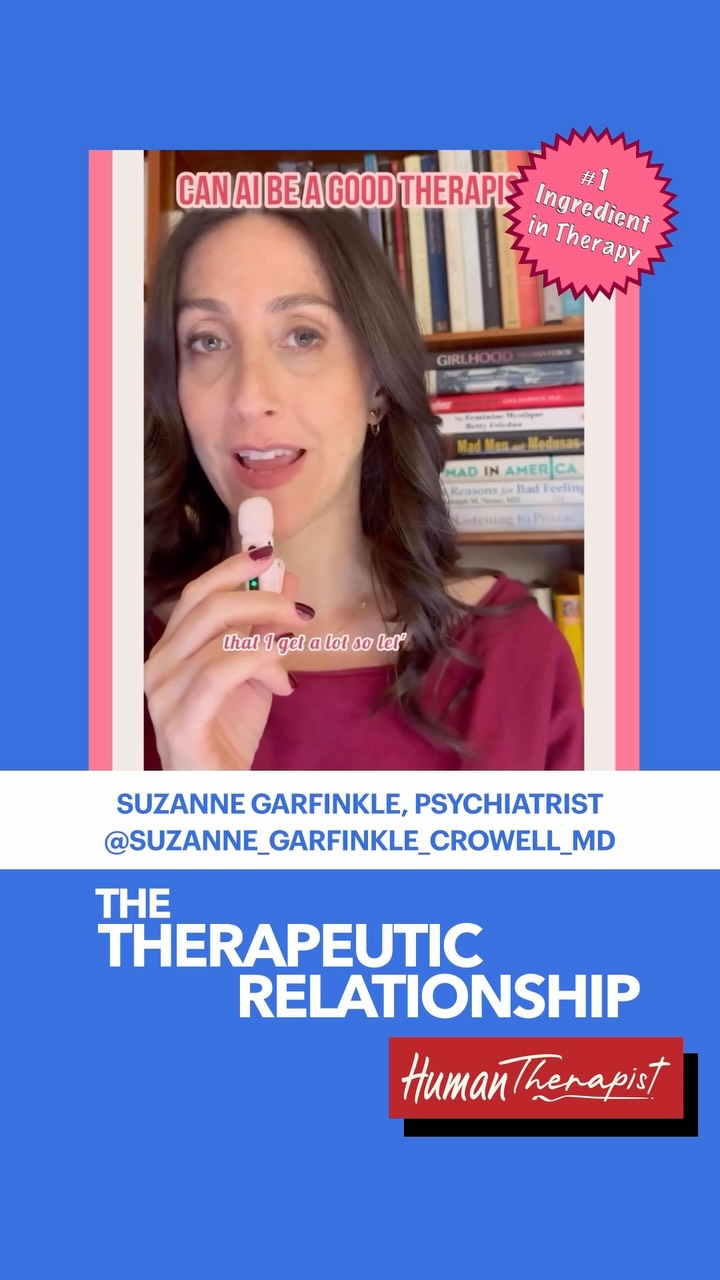
Can AI be a good Therapist?
 Therapeutic Relationship
Therapy with a Human-Therapist gives people the chance to practice a new way of relating with other people, but with AI, you lose all of
 Therapeutic Relationship
What makes Therapy, Therapy is the relationship between the client and the Human-Therapist
 Therapeutic Relationship
One thing that a Human-Therapist will always notice is how often and when you are laughing in session
 Therapeutic Relationship
The way in which a client might want to be viewed by a Human-Therapist; is there a way in which the client wanted them to think about them
 Therapeutic Relationship
Where is your anger in all this?
 Therapeutic Relationship
I remember before I became a therapist, I always wondered if my therapist thought of me outside of session, or like, cared, like truly
 Therapeutic Relationship
A therapist will notice you laughing in session, and understand why